The Restaurant of Many Orders: How Many Doors Until You Notice? | Classics in 5 Minutes #03
The story in brief
- In a restaurant deep in the mountains, two gentlemen pass through seven doors of written orders in Kenji Miyazawa's tale.
- The turn comes when they finally catch on; before that, there were five moments when one of them said something seemed odd.
- The question it leaves you: at which door would you have noticed?
Video

Pressing play loads the YouTube player on this page. Watch on YouTube
Explained
In the video
- 0:00What waits behind the first door?
- 0:25What kind of story is this?
- 0:42What do the two gentlemen find in the mountains?
- 1:39What is written on the seven doors?
- 3:20When do they start to notice?
- 4:16What are the white dogs?
- 5:02Did you notice before they did?
- 6:11What question does this story ask you?
This page tells the whole of Kenji Miyazawa's "The Restaurant of Many Orders," right to the end. The story has no chapters, so we follow it scene by scene. Every event and quote from the story has been checked against the original Japanese text on Aozora Bunko, a free online library of Japanese books whose copyright has expired (book card No.43754). The translations are our own. This page gives away the ending. If you'd rather meet the story first, start with the video above. Short on time? The next section gives you the story in 30 seconds.
The story in 30 seconds
Two young gentlemen go hunting deep in the mountains. Their guide wanders off, their two huge dogs collapse and die, and the men lose their way. Cold and hungry, they come upon a Western-style restaurant called Wildcat House. Inside, door after door carries an order for the guests: tidy your hair, leave your guns, rub cream on your skin, sprinkle perfume on your heads. Each time, the men explain the order away and obey. Only when told to rub salt all over themselves do they realize that they are the dinner. Then the dogs come crashing in, and the restaurant vanishes like smoke.
Characters
Nobody in the story has a name.
| Who | What they're like | What they do |
|---|---|---|
| Two young gentlemen | Hunters dressed up like British soldiers, with shiny guns | Obey every order on the doors, explaining each one away |
| Two dogs "like polar bears" | The gentlemen's huge white hunting dogs | Collapse and die in the mountains, then burst in at the end |
| The professional hunter | The guide who led them into the mountains | Loses them early on; finds them again at the end |
| Voices behind the door | Two speakers who never show themselves | Grumble about the boss's wording and call the men in |
| The boss | Wrote the orders on the doors; never seen | Waits with a napkin and a knife, the voices say |
The story, scene by scene
From here, the story is told in order, up to the moment before the ending.
1. Lost in the mountains
Two young gentlemen, dressed up like British soldiers, are out hunting deep in the mountains with two dogs as big as polar bears. Their guide, a professional hunter, gets confused and wanders off, and the mountains are so eerie that both dogs grow dizzy, foam at the mouth and die.
The first thing the men talk about is what the dogs cost. "That's a loss of two thousand four hundred yen for me." "Two thousand eight hundred for me." They decide to head back, buy some pheasants at the inn, and call it the same as a day's hunting. But they can't find the way. The wind comes whooshing down. The grass rustles, the leaves crackle, and the trees creak and groan.
2. Wildcat House appears
Hungry and lost, they happen to look behind them, and there stands a fine Western-style house, built in the European manner. The sign at the entrance reads "RESTAURANT 西洋料理店 WILDCAT HOUSE 山猫軒," in English and Japanese. "Odd. A restaurant, way out here?" says one. "The sign says so, doesn't it?" says the other, and in they go.
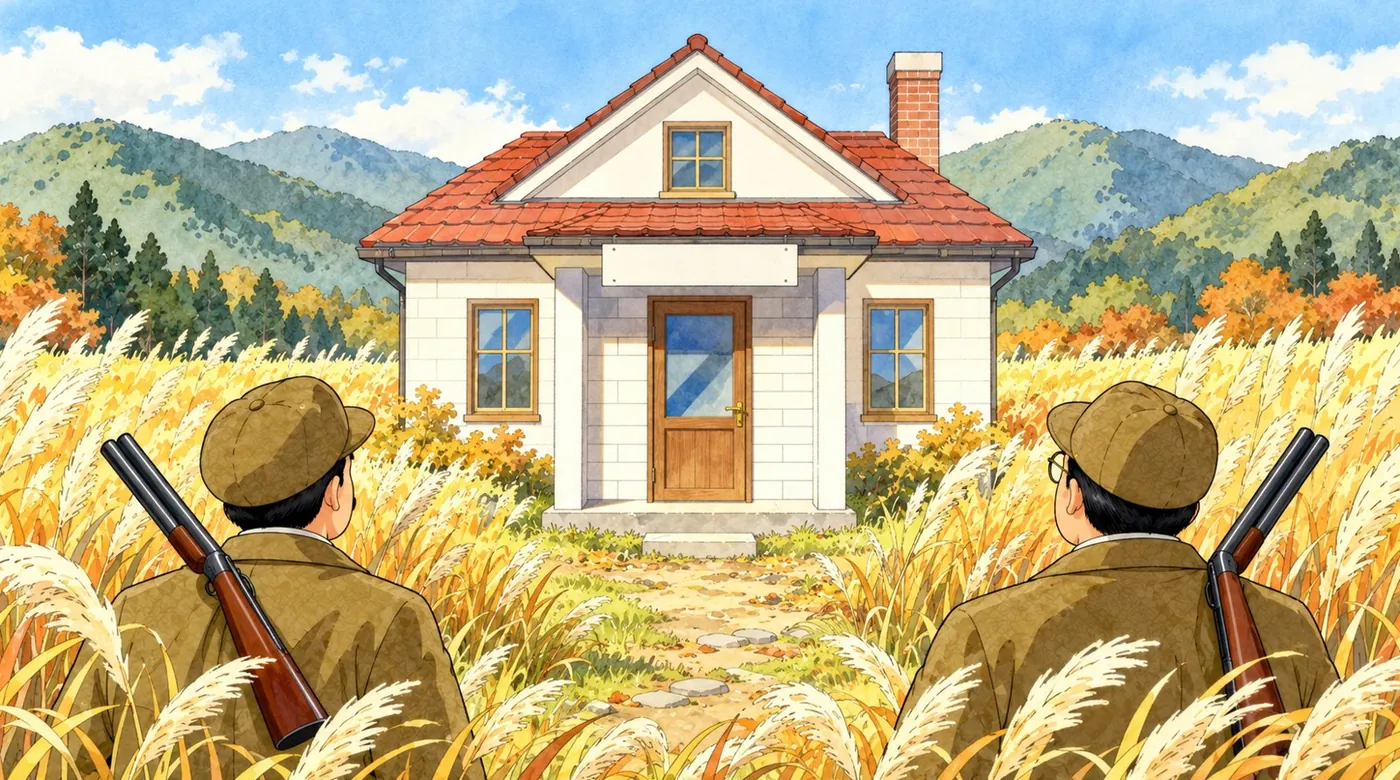
On the glass door, in gold letters: "Everyone, please come in. There's no need to hold back." The men decide this means the meal is free. On the back of the door: "Guests who are plump or young are especially welcome." "Well, we're both!" they cheer.
3. Down the corridor of doors
Next comes a door painted light blue. "What a strange house. Why are there so many doors?" "It's Russian style. Houses up in the cold mountains are all like this." The door says this is "a restaurant of many orders," and the men take that to mean business is good.
From then on, every door has an order. Tidy your hair and brush the mud off your boots. Leave your guns and bullets. Take off your hats, coats and boots. Put your glasses, wallets and anything metal in the safe. Rub the cream from the pot on your faces, hands and feet. Sprinkle the perfume on your heads. Each time, they find an explanation that suits them: very important people must come here; they must cook with electricity, so metal would be dangerous.
Strange things happen along the way. At the third door, the moment they put the brush down, it blurs and vanishes, and the two men, huddled together in fright, hurry into the next room. At the cream pot, each of them secretly eats the leftover cream while pretending to rub it on his face. And the perfume smells oddly like vinegar.
4. The back of the sixth door
On the back of the sixth door, in big letters:
So many orders! How tiresome they must have been. We are so sorry. This is the last one. Please rub plenty of salt from this pot all over your bodies.
Source: Kenji Miyazawa, "The Restaurant of Many Orders" (Aozora Bunko), the order on the back of the sixth door. Our translation.
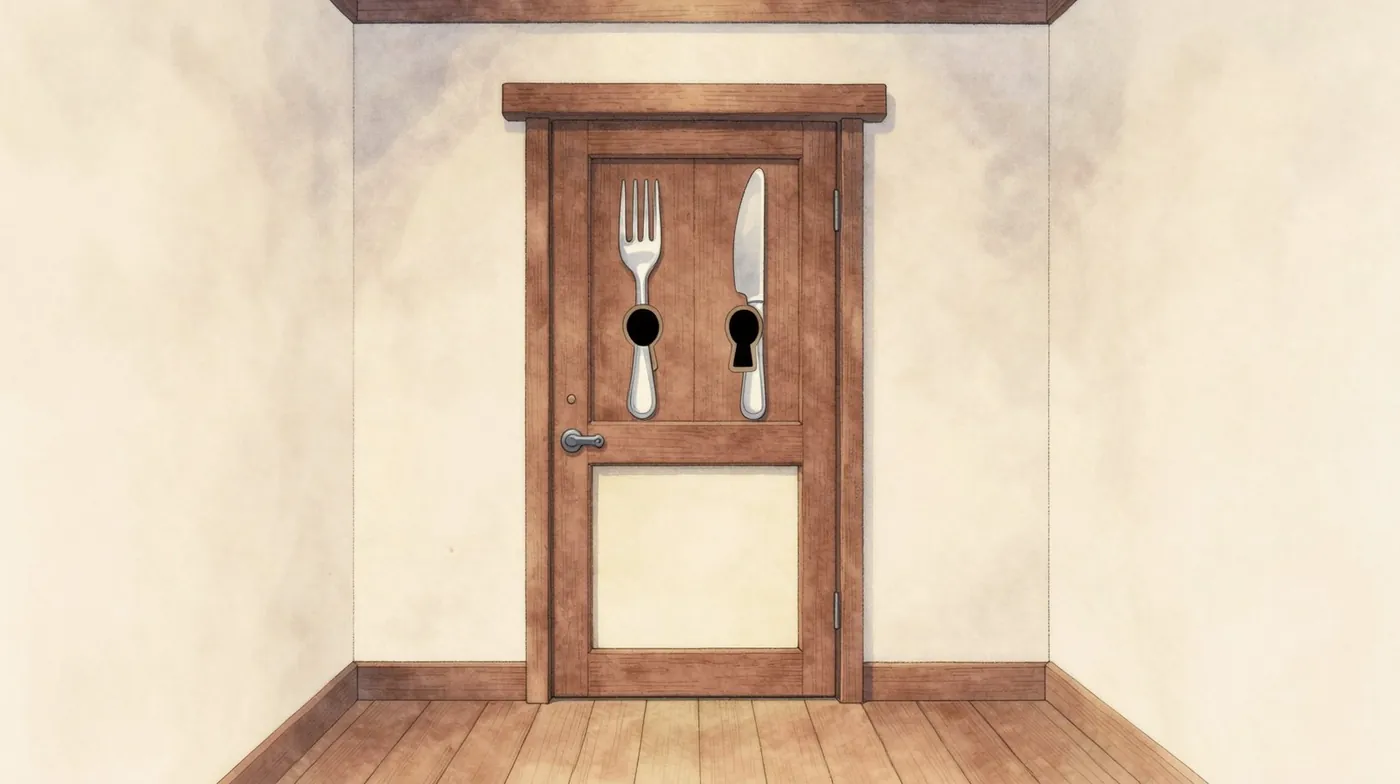
The men stare at each other's cream-covered faces. "We aren't the ones giving the orders. They're giving them to us!" This restaurant does not serve Western food to its guests. It turns its guests into Western food and eats them. They try to run, but the door behind them won't budge. The last door has a silver fork and knife cut into it and two big keyholes, and through the keyholes a pair of blue eyes is peering out.
The ending (spoilers)
From here on, we tell the ending as it is.
Behind the door, two voices whisper. "No good. They've noticed." "It's the boss's fault for writing it like that." Then they call out to the men: "The plates are washed, and the greens are already rubbed with salt." "Or perhaps you don't care for salad? Then shall we light the fire and fry you instead?"
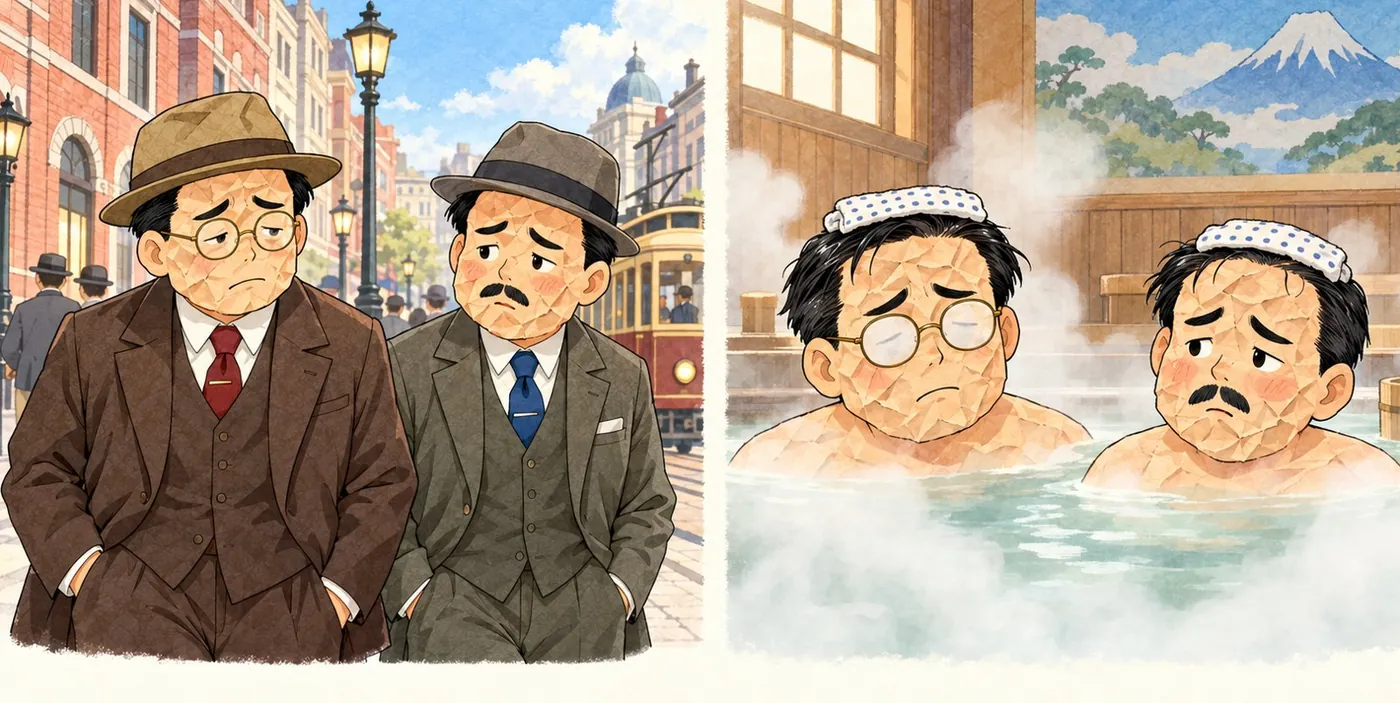
The men are so frightened that their faces crumple up like scraps of wastepaper, and they cry, and cry, and cry, and cry, and cry.
Just then, the two white dogs come crashing through the door behind them. The eyes in the keyholes vanish. The dogs leap at the next door, and from the pitch dark beyond it comes a cat's yowl, a screech and a growl. The room vanishes like smoke, and the two men are left shivering in the grass. Their coats, boots, wallets and tie pins hang from branches or lie scattered among the roots. The wind comes whooshing down. The grass rustles, the leaves crackle, and the trees creak and groan.
Someone calls, "Sir! Sir!" and the hunter comes pushing through the grass, wearing a hood of woven straw against the rain. The men are saved at last. They eat the dumplings he has brought, buy ten yen's worth of pheasants on the way, and go home to Tokyo.
But their faces, once crumpled like wastepaper, never went back to the way they were, not when they got home to Tokyo, not even after a hot bath.
Source: Kenji Miyazawa, "The Restaurant of Many Orders" (Aozora Bunko), the last sentence. Our translation.
Seven doors, thirteen orders
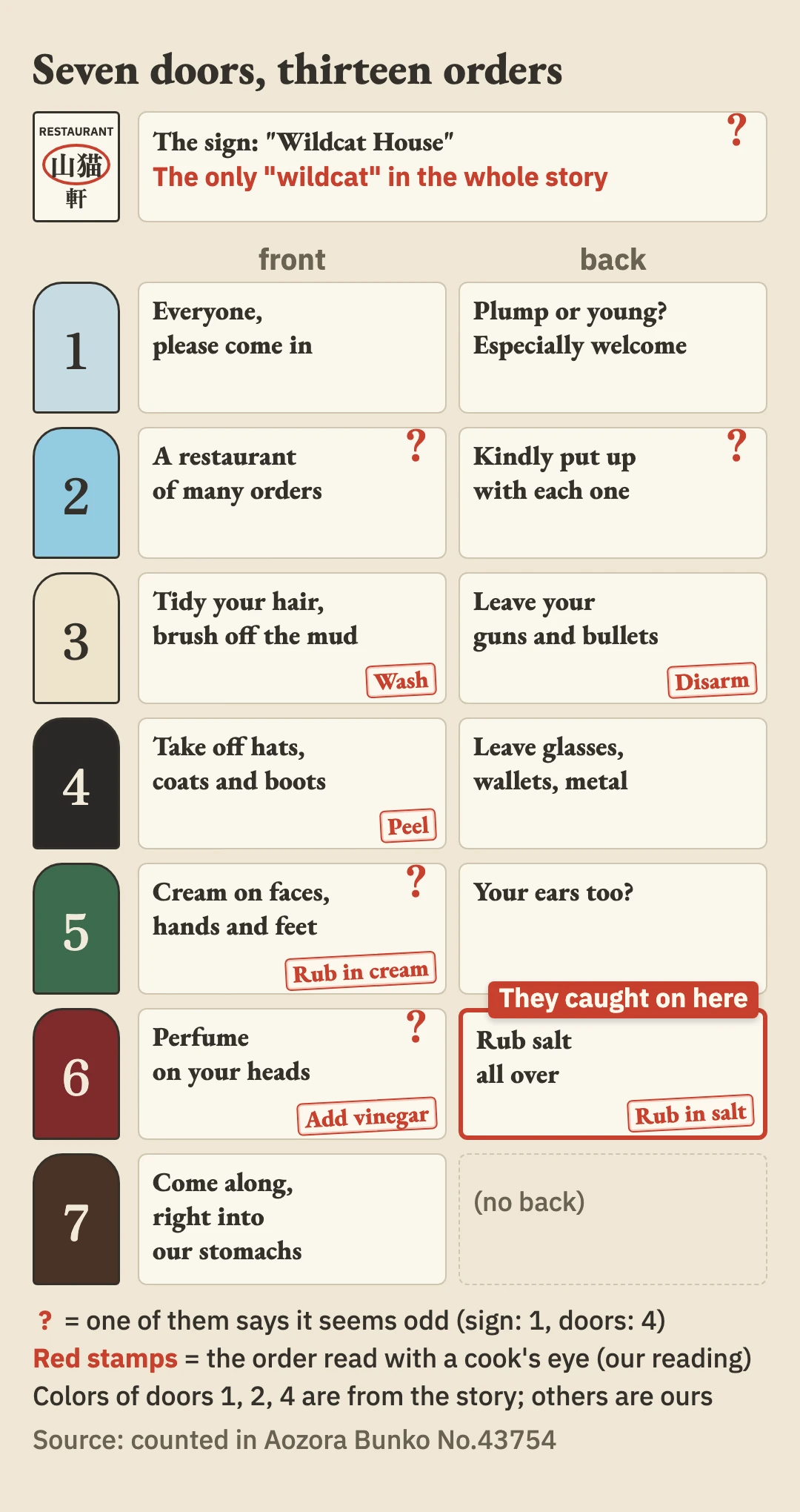
There are seven doors and thirteen orders on them: one on the front of every door, and one on the back of doors one to six. The table gives each order in short. After each arrow is the same order read with a cook's eye. That is our own reading, not the story's words; the story itself says only that the house "turns its guests into Western food and eats them."
| Door | Front → with a cook's eye | Back → with a cook's eye |
|---|---|---|
| 1 | Everyone, please come in | Plump or young guests especially welcome → plump or young, both make good eating |
| 2 | A restaurant of many orders | Kindly put up with each one |
| 3 | Tidy your hair, brush off the mud → wash | Leave your guns and bullets → disarm |
| 4 | Take off hats, coats and boots → peel | Leave glasses, wallets, anything metal → remove the metal |
| 5 | Cream on faces, hands and feet → rub in cream | Did you do your ears too? → even the ears |
| 6 | Sprinkle the perfume on your heads → add vinegar | Rub salt all over your bodies → rub in salt |
| 7 | Come along, right into our stomachs → dinner is served | (no order on the back) |
Three of the orders in full:
- Door 2, front: "This is a restaurant of many orders. Please bear that in mind."
- Door 6, front: "Your meal is nearly ready. We won't keep you even fifteen minutes. You'll be served very soon. Quickly, sprinkle the perfume from this bottle over your heads."
- Door 7, front: "Well, thank you for your trouble. You've turned out very nicely. Come along now, right into our stomachs."
"You'll be served very soon" works both ways in English, just as the Japanese line does: the meal will be served to you, or you will be served as the meal. In the original, door 1 is glass, door 2 is painted light blue and door 4 is black. The other doors' colors in our chart are our own choice.
Why didn't they notice until the salt?
They only caught on at the back of the sixth door, when they read the order about salt. Before that, there were five moments when one of them said out loud that something seemed odd, each time in different words. And each time, the other explained it away.
- At the sign: "Odd. A restaurant, way out here?" → "Of course we can eat. The sign says so, doesn't it?"
- Door 2, front: "What a strange house. Why are there so many doors?" → "It's Russian style. Houses up in the cold mountains are all like this."
- Door 2, back: "What on earth does that mean?" → "So many customers are ordering that the food will take a while."
- Door 5, front: "Why would they want us to put on cream?" → "It's freezing outside. It's so our skin doesn't crack in the warm room."
- Door 6, front: "This perfume smells like vinegar. What's going on?" → "A mistake. The maid must have a cold and filled it wrong."
The very first time was at the sign, before they had even gone inside.
They also kept telling themselves that someone important must be inside. In the original Japanese, the word for "important" (偉い, erai) appears exactly four times, every time from the two men: at the front and back of door 3, the front of door 4, and the front of door 5. At door 5, one of them even says, "Out here, of all places, we might get to know some aristocrats."
And right from the first door, "There's no need to hold back," they had decided the meal was free. There were silent clues too, like the vanishing brush. Every time, they read the orders in the way that suited them.
The shape of the story, and one sentence that repeats
Measured by length in the original Japanese, 15.7% of the story comes before the restaurant appears, 50.9% runs from finding it to the order about salt (the sign, the entrance and the doors), and 33.4% comes after they realize. Almost half the story happens between finding the restaurant and the salt.
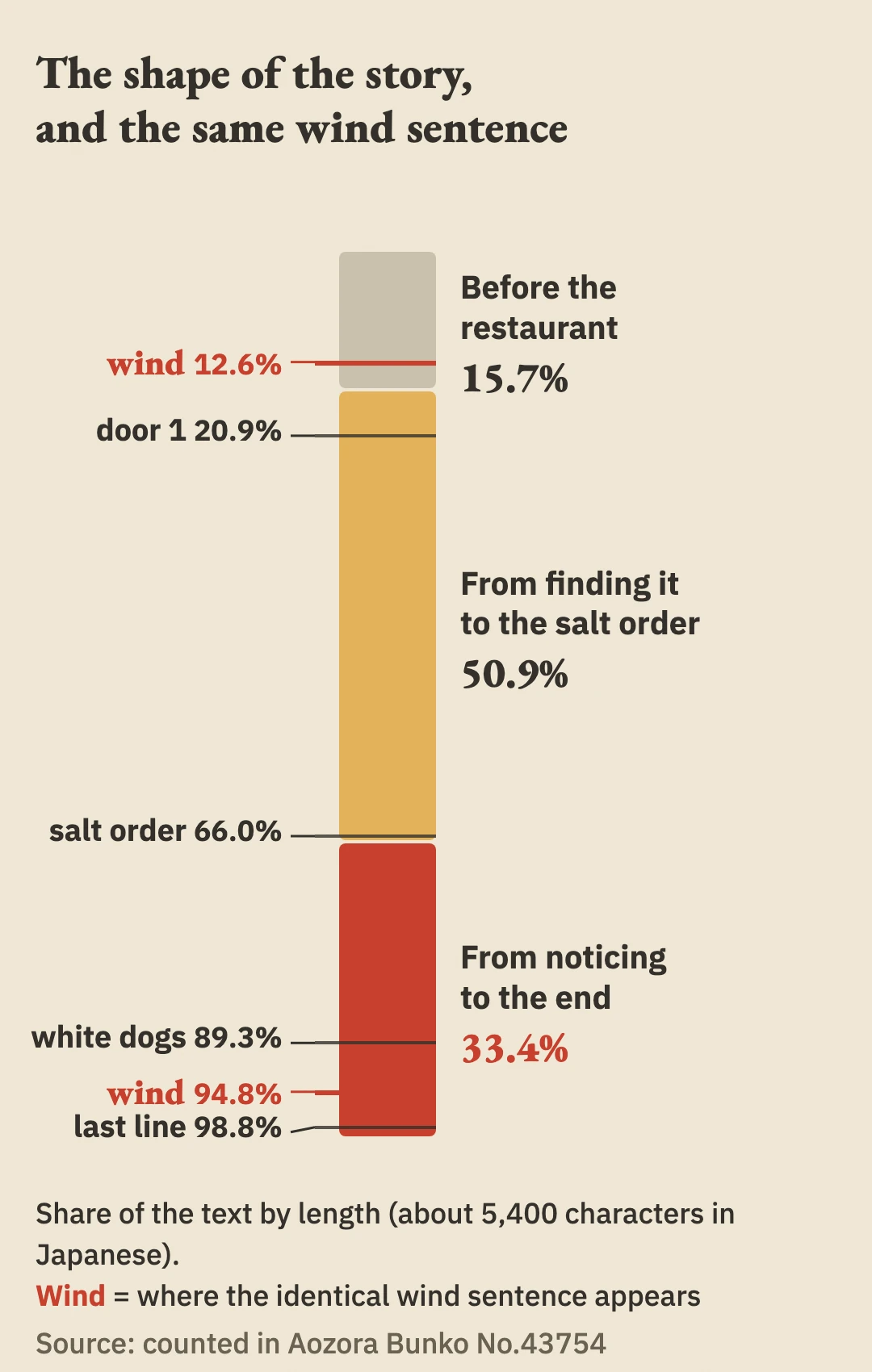
Just before the restaurant appears (12.6% of the way in) and just after it vanishes (94.8%), the very same sentence appears, word for word:
The wind comes whooshing down. The grass rustles, the leaves crackle, and the trees creak and groan.
Source: Kenji Miyazawa, "The Restaurant of Many Orders" (Aozora Bunko), in the mountains and after the restaurant vanishes. Our translation.
It frames the restaurant like a picture frame, at its entrance and its exit.
One more thing. In the original Japanese, the word for "wildcat" (山猫, yamaneko) appears only once in the whole story: on the sign, "Wildcat House." Even the character for "cat" appears nowhere else. The clue to the secret was on the sign from the very start, and the men walked in saying, "The sign says so, doesn't it?"
What the book's own leaflet said about this story
When the book first came out, an advertising leaflet gave a short note on each of its nine stories. The leaflet is unsigned, but scholars believe Kenji wrote it himself. Here is its note on this story:
The story of two young gentlemen who lose their way while hunting, enter "The Restaurant of Many Orders," and end up being given orders by its outrageous owner. It is the irrepressible resentment that hungry village children feel toward city civilization and the self-indulgent classes.
Source: advertising leaflet for the first edition, Aozora Bunko No.43734. Our translation.
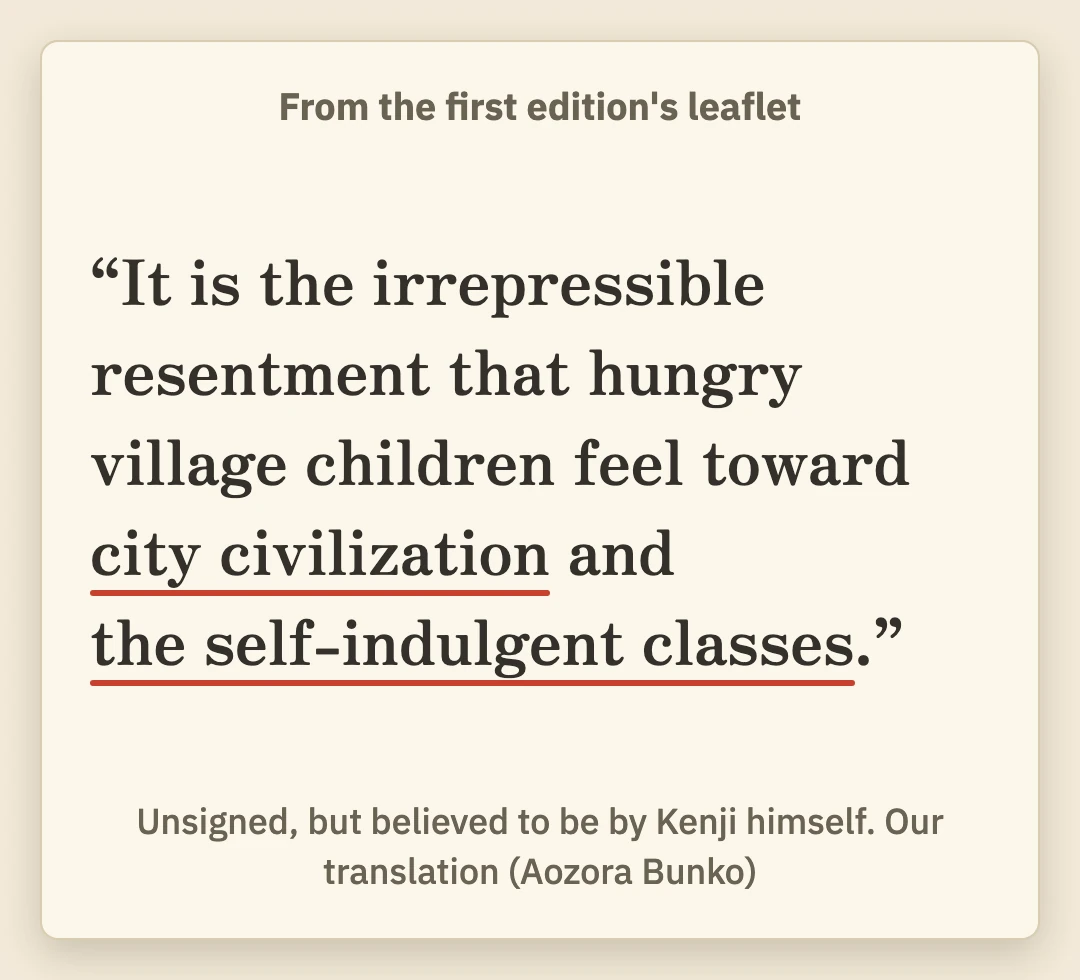
The leaflet says the gentlemen "end up being given orders" instead of giving them. The city gentlemen, who put a price even on their dead dogs, were the very ones the mountain restaurant nearly cooked. How the "village children" read this story, we leave to you.
The book was meant to be the first of twelve volumes of "Ihatov" stories. Ihatov, the leaflet explains, is Iwate, Kenji's home prefecture, as a dreamland that existed in the author's mind, and it calls this book "the first volume of the twelve-volume series." In the end, it was the only one.
How many copies of the book is one dog worth?
The two men called their dead dogs "a loss of ¥2,400" and "a loss of ¥2,800." The first edition of this very book cost ¥1.60 (one yen and sixty sen; 100 sen made one yen).
- One dog (¥2,400) ÷ the book's price (¥1.60) = 1,500 copies
- The other dog (¥2,800) = 1,750 copies. Both dogs (¥5,200) = 3,250 copies
- Only 1,000 copies of the first edition were printed. Buying all of them at the list price would cost ¥1,600, still ¥800 short of one dog
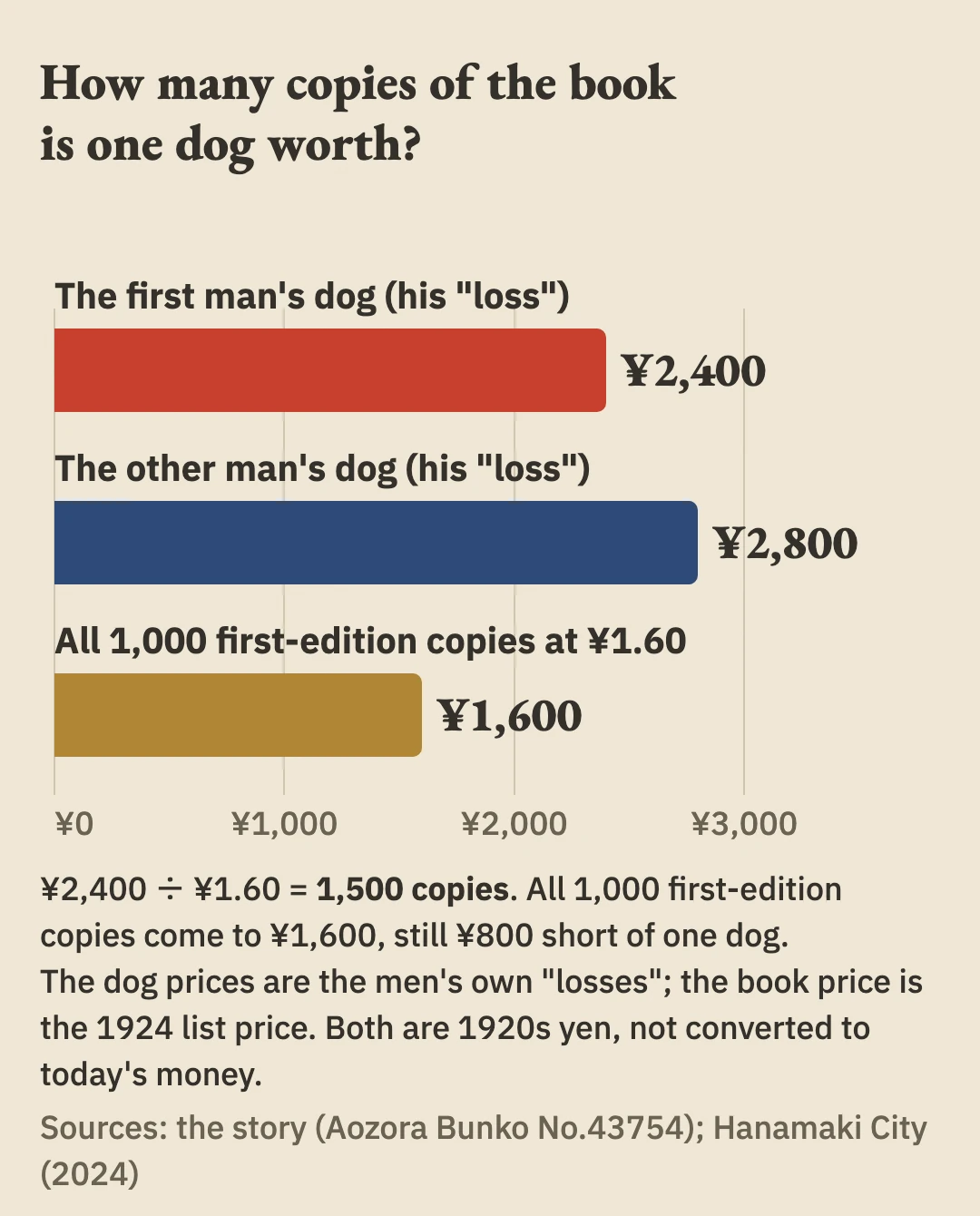
The book was advertised in the children's magazine Akai Tori (Red Bird), but it drew little attention and sold poorly. Because the publisher was in trouble, Kenji borrowed money from his father and bought 200 copies himself (Hanamaki City).
How we compared: the dog prices are the men's own "losses" in the story; the book price is the 1924 list price. Both are yen of the same era, Japan's Taisho period (1912–1926), so we compared them as they are. We did not convert them into today's money, because the answer changes a lot depending on which price index you use. And since the story was written in 1921 and the book came out in 1924, Kenji did not intend this comparison.
About the story and its author
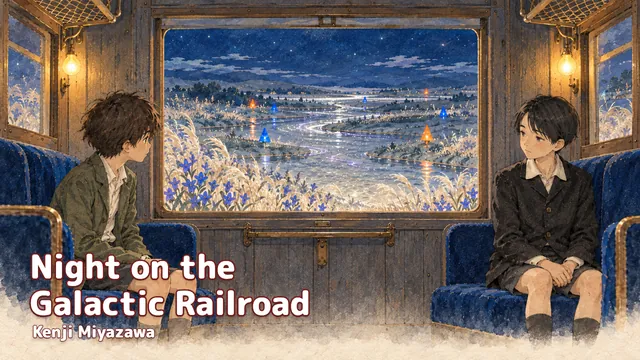
Kenji Miyazawa (1896–1933) was a poet and writer of children's stories from Hanamaki, in Iwate Prefecture in northern Japan. He is best known abroad for Night on the Galactic Railroad. "The Restaurant of Many Orders" was written in 1921. On December 1, 1924, it gave its title to a collection of nine of his children's stories, the only such collection published in his lifetime (Hanamaki City). The original is short: about 5,400 Japanese characters.
Questions to think about
- Did the men change inside? Their faces never recovered. Yet on the way home they bought pheasants, just as they had planned on the mountain ("It'll come to the same thing"). The story never tells us what they were thinking.
- Why did the dogs come back? The dogs "foamed at the mouth and died" on the mountain, yet they came crashing through the door. The story does not explain it.
- At which door would you have caught on? Read the orders in the table again from door 1. At which one do the men's explanations start to sound wrong to you?
FAQ
What is The Restaurant of Many Orders about?
Two young gentlemen lost in the mountains walk into a restaurant called Wildcat House and obey the orders written on door after door, until they realize the restaurant means to eat them. They escape, but their faces, crumpled up with fright, never recover.
Is the owner of Wildcat House a wildcat?
The story never says outright who runs the restaurant. The clues are the sign, "Wildcat House" (the only time the word "wildcat" appears in the original), and the cat's yowl, screech and growl heard after the dogs leap through the last door.
How many doors and orders are there?
Seven doors and thirteen orders. There is an order on the front of all seven doors and on the back of doors one to six. The seventh door has only the one on its front.
What does "many orders" in the title mean?
The Japanese word chūmon (注文) means an order you place at a shop or restaurant, and also a demand. English "order" works the same way. The men first think the many orders come from busy customers. At the sixth door they realize, "We aren't the ones giving the orders. They're giving them to us!"
What happens to the two gentlemen at the end?
When the dogs burst in, the restaurant vanishes and the men find themselves standing in the grass. Their guide finds them, they buy some pheasants and go home to Tokyo, but their crumpled faces never go back to normal, not even after a hot bath.
Why do the dead dogs come back?
The story does not say. The dogs that died on the mountain simply come crashing through the door with a "Woof, woof, grrr!" at the very end.
When was the story written and published?
It was written in 1921 and published on December 1, 1924, as the title story of a collection of nine children's stories. It was the only collection of Kenji Miyazawa's children's stories published in his lifetime.
Can I read it in English?
Yes. John Bester's translation, "The Restaurant of Many Orders," appears in Once and Forever: The Tales of Kenji Miyazawa (Kodansha International, 1993; NYRB Classics, 2018). The original Japanese is free on Aozora Bunko.
Reading the original
- In English: John Bester's translation in Once and Forever: The Tales of Kenji Miyazawa (Kodansha International, 1993; NYRB Classics, 2018). The quotes on this page are our own translations, so the wording there will differ.
- In Japanese: the text is free on Aozora Bunko (book card No.43754, modern spelling). It is short, about 5,400 characters, and easy to read in one sitting. There is also a version in the old spelling (No.1927).
- The leaflet: the advertising leaflet quoted above is also on Aozora Bunko (No.43734).
- Where to start: now that you know the ending, try rereading the orders on the doors one by one, first the way the two men read them, then with a cook's eye.
Shorts
Sources
Where the facts and numbers in the video and on this page come from.
References
- Pictures and charts: made for this page by Tamelabo. The first edition's cover and illustrations are not used. The red "kitchen" stamps on the orders are our own reading.
Links
- Kenji Miyazawa, Chumon no ooi ryoriten, Aozora Bunko No.43754 (base text: Shincho Bunko), in Japanese (the basis for the plot, the characters and every quote. We also counted the length, the doors and orders, the word "important," the word "wildcat," the wind sentence and the story's proportions in this text)aozora.gr.jp/cards/000081/card43754.html
- Advertising leaflet for the first edition, Aozora Bunko No.43734, in Japanese (the leaflet's note on the story and the twelve-volume plan)aozora.gr.jp/cards/000081/files/43734_17913.html
- Hanamaki City press material on the donation of a first edition (February 20, 2024), in Japanese (nine stories, the only collection in his lifetime, 1,000 copies, ¥1.60, sales, 200 copies, twelve-volume plan)city.hanamaki.iwate.jp/_res/projects/default_project/_page_/00…
- Kotobank, "Chumon no ooi ryoriten," in Japanese (written in 1921)kotobank.jp/word/注文の多い料理店-100361
- Yoshihiro Fujii, Bulletin of the Faculty of Human Life Sciences, Fuji Women's University, No.53 (2016), in Japanese (the leaflet is thought to be Kenji's own writing)fujijoshi.repo.nii.ac.jp/record/873/files/KJ00010243262.pdf
- Kirkus Reviews, Once and Forever (the English title and translation)kirkusreviews.com/book-reviews/kenji-miyazawa/once-and-fo…
- Wikipedia, "Kenji Miyazawa" (Night on the Galactic Railroad)en.wikipedia.org/wiki/Kenji_Miyazawa
- version in the old spelling (No.1927)aozora.gr.jp/cards/000081/card1927.html
- Aozora Bunko (No.43734)aozora.gr.jp/cards/000081/card43734.html