Run, Melos! by Osamu Dazai — Could You Run 39 km Before Sunset? | Classics in 5 Minutes #01
The story in brief
- Melos, a young shepherd, wins a three-day grace with his friend as hostage and runs about 39 km before sunset.
- The climax comes in Act IV at the execution ground — having crossed the bad roads, will he make it in time?
- The question it leaves: what if your friend were the hostage — what would you do?
Video

Pressing play loads the YouTube player on this page. Watch on YouTube
Explained
In the video
- 0:00What if your friend were a hostage?
- 0:21What legend is the story based on?
- 0:58Who are the three main characters?
- 1:25Act I: What did Melos promise?
- 2:20Act II: What are the two kinds of time?
- 3:09Act III: What stands in Melos's way?
- 3:53Act IV: What waits at the execution ground?
- 4:48Fact check: can you run 39 km before sunset?
- 5:31What does the most famous line mean?
- 6:02What three questions does the story ask us?
- 6:36Where can you read it yourself?
Three days of freedom, with a friend held hostage. The road back to him is about 24 miles (39 kilometers). Can Melos reach the city before sunset? This guide follows the characters, plot, and reading questions in Osamu Dazai's 1940 short story. It includes plot details, but leaves the final comic surprise for you to discover. The Japanese original is about 9,800 characters long, roughly 16–25 minutes at 400–600 characters per minute.
The plot in 30 seconds
Melos, a village shepherd, is arrested after confronting a king who trusts no one. He asks to return home for his sister’s wedding, leaving his closest friend, Selinuntius, as a hostage. Unless Melos returns by sunset on the third day, his friend will die. On the return journey, a flood, bandits, and exhaustion threaten his promise. He nearly gives up, but spring water revives him, and he runs again for the friend who believes in him. At the execution ground, both men admit their moments of weakness. Their honesty and reunion move the watching king.
About the story
| Item | Detail |
|---|---|
| Author | Osamu Dazai |
| First publication | Shincho magazine, May 1940 |
| Setting | Ancient Sicily, in and around Syracuse |
| In Japan | A story read by generations of students in junior-high Japanese classes |
An earlier version of the friendship story is the ancient Greek legend of Damon and Pythias, retold by Friedrich Schiller in his 1799 ballad The Hostage. Dazai’s text ends with a note acknowledging an old legend and Schiller’s poem.
The story opens with a young man's fierce anger. Yet it is more than a strong hero's struggle against a cruel ruler. A journey to keep a promise becomes a test of what it means to trust another person. This article uses our own summaries and explanations throughout; it contains no translated quotations from Dazai.
The three main characters, and one more
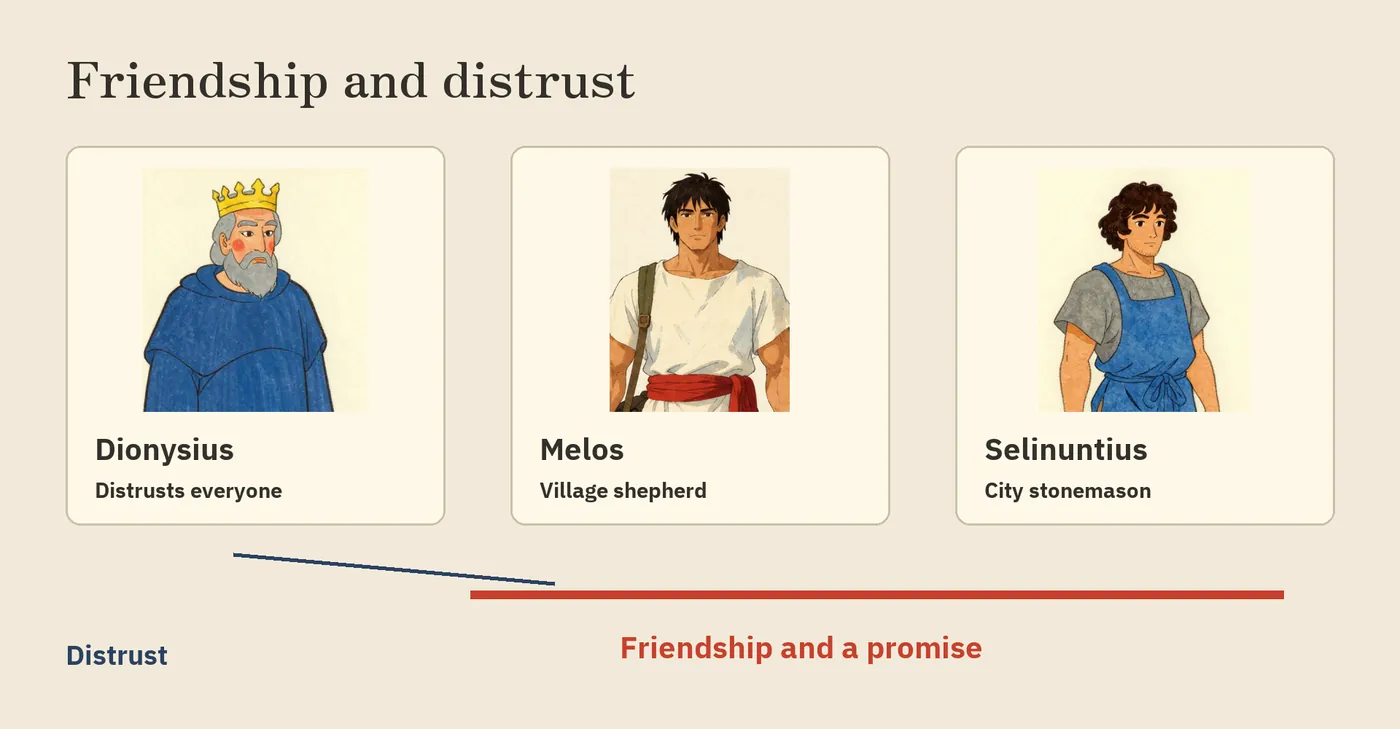
- Melos is a village shepherd who lives with his sixteen-year-old sister. He is sincere, impulsive, and far from flawless.
- Selinuntius, his childhood friend, works as a stonemason in Syracuse. A stonemason shapes stone for buildings and other work.
- King Dionysius has lost his trust in people and executes even the innocent.
Another character becomes important during the final run: Philostratus, the young apprentice of Selinuntius. He runs alongside Melos near the end. His part adds another reason to read the original story.
The plot in four acts
The Japanese original has no numbered chapters. These four acts are divisions used by this guide to make the sequence easier to follow.
Act I: The Promise
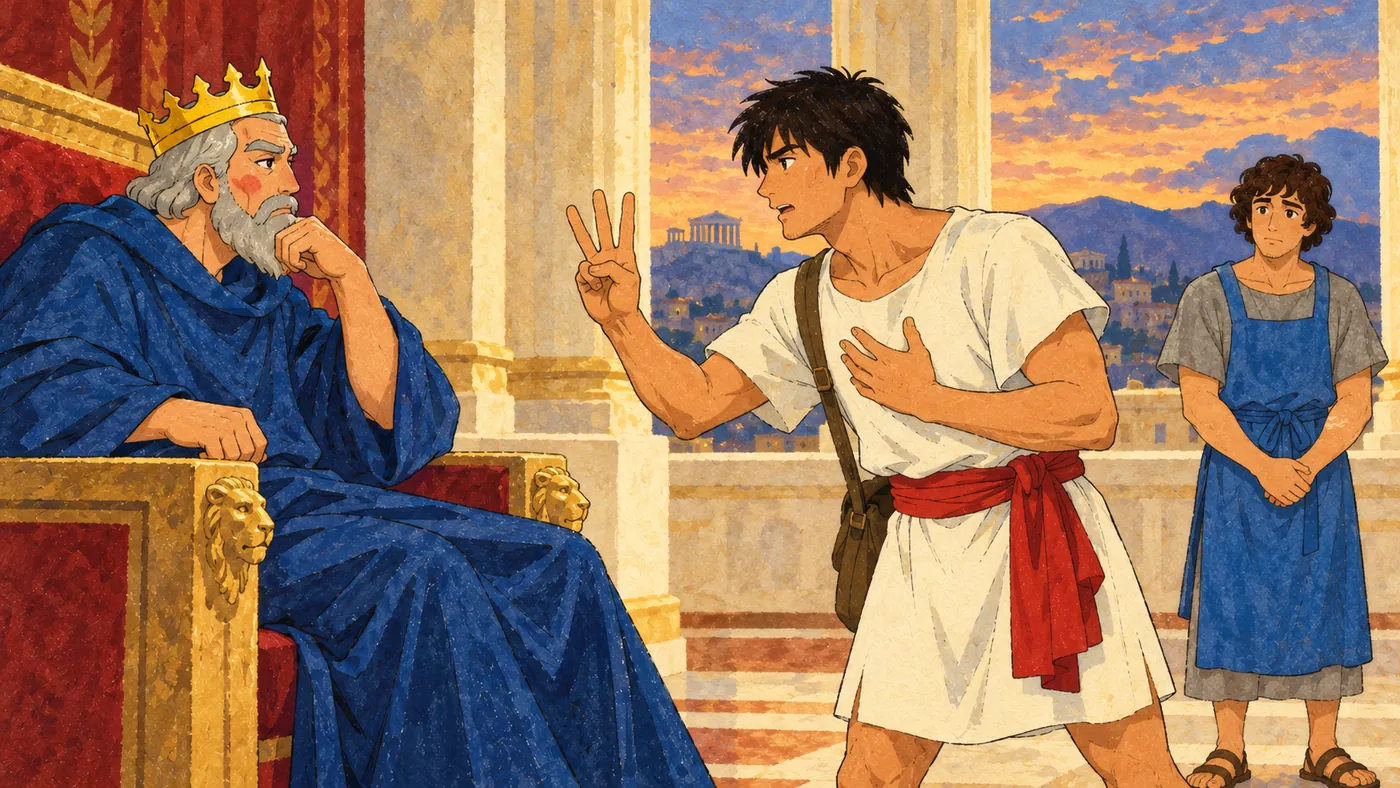
Melos comes to Syracuse to buy supplies for his sister's wedding. The streets are strangely quiet. When he discovers that the king is killing innocent people out of distrust, he storms into the castle and is arrested.
He asks for three days to hold the wedding and promises to return. Selinuntius will remain as a hostage. If Melos returns by sunset on the third day, he himself will face execution. If he fails, his friend will die. Melos sets out for his village.
Act II: Two Kinds of Time
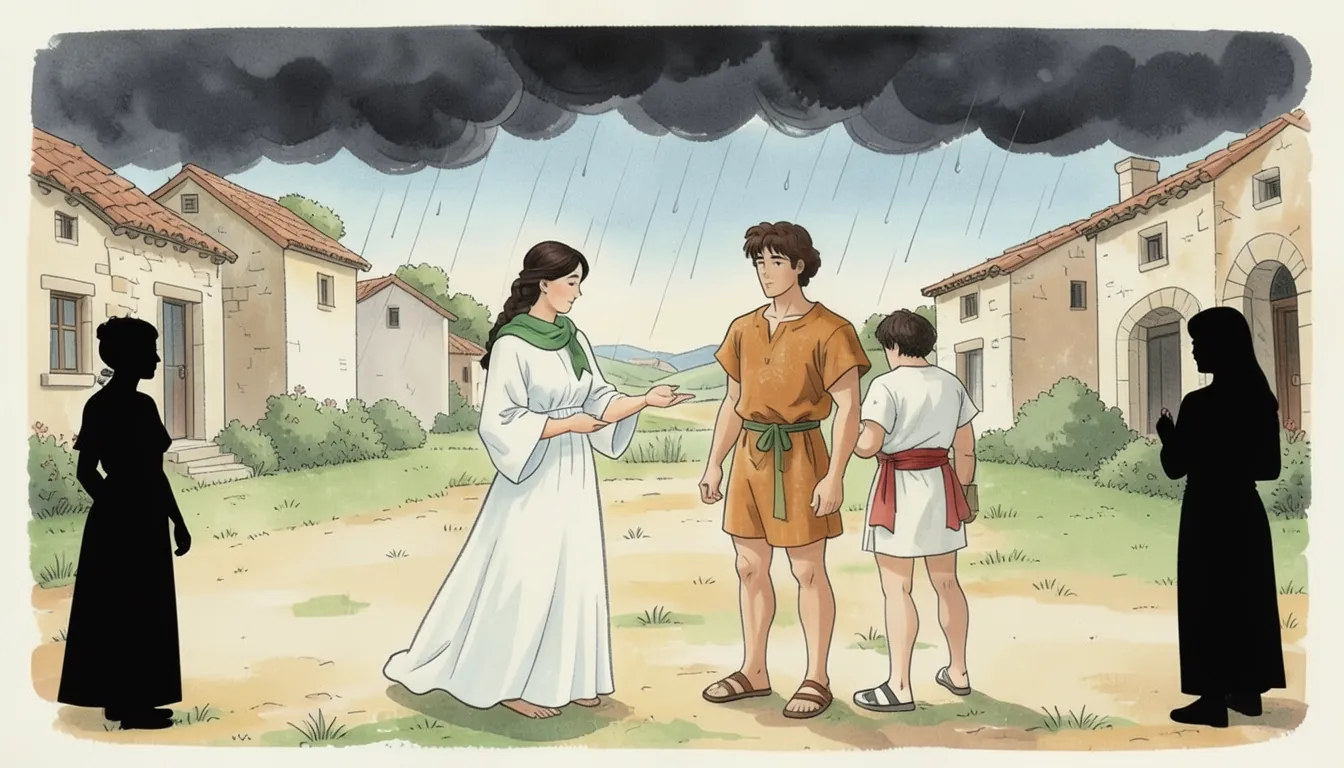
After traveling all night, Melos reaches the village the following morning. The wedding takes place the next day at noon. Dark clouds spread overhead and heavy rain begins. The feast continues into the night, and Melos falls deeply asleep.
He wakes around dawn on the final day, gets ready, and runs out into the rain. But after reaching the next village, with the sun already high, he relaxes. He starts strolling and singing. His easy confidence will cost him dearly.
Act III: The Road
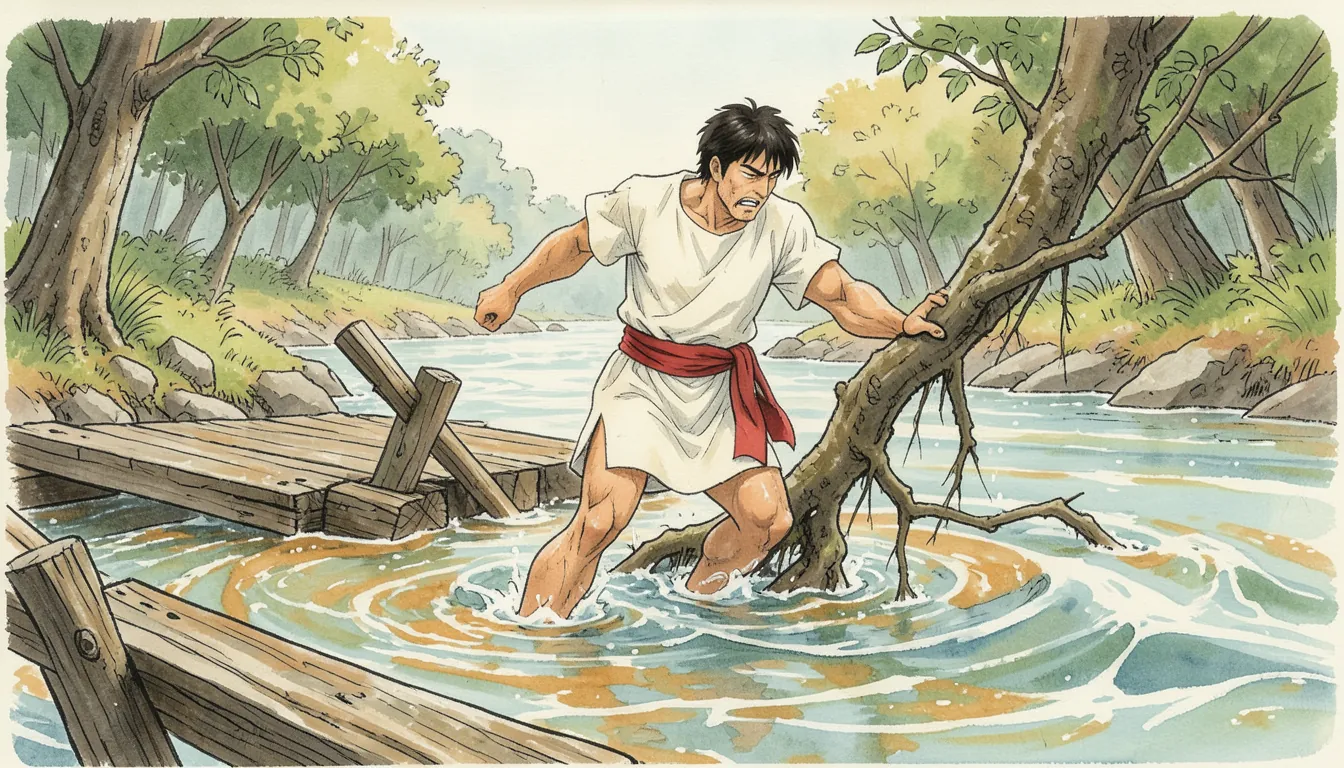
The river is swollen, the bridge is gone, and no boat is available. Melos plunges in and struggles to the far bank. By then, the sun is already past noon.
Bandits stop him at a mountain pass. He fights through them and keeps running, until his strength fails and he falls in the grass. Now the danger is inside his own mind. He starts to feel that he has tried hard enough and deserves to give up. That temptation almost ends his journey.
Act IV: The Execution Ground
Spoilers follow for the reunion and the king’s response. The final comic surprise remains unspoiled.
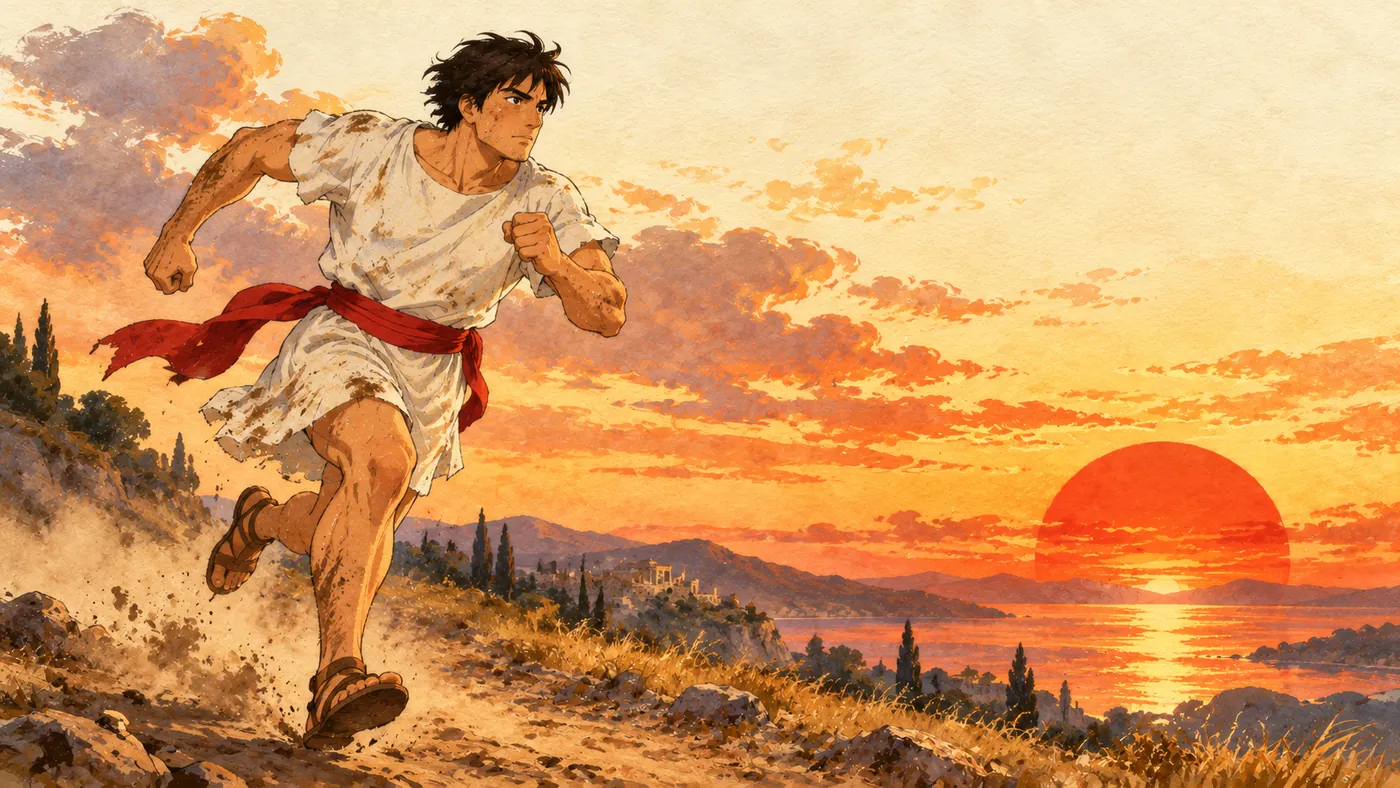
Water from a spring in the rocks revives him. The thought of a friend who is counting on him gives him a reason to run again. He reaches the execution ground just as the sun goes down.
The arrival is only part of the ending. Melos first asks his friend to strike him, admitting that he nearly quit. After striking him, Selinuntius admits that he briefly doubted Melos and asks to be struck in return. They embrace and weep.
Watching them, the king admits that trust is real and asks to join their friendship. A small comic surprise follows at the very end. We leave that moment for your own reading.
Could a person cover about 24 miles (39 km)?
Dazai describes the route as ten ri. Using the Japanese ri of approximately 3.927 km gives about 24.4 miles (39.27 km), rounded to about 24 miles (39 km). This is a comparison based on the unit in the Japanese text, rather than a measurement of an actual road in ancient Sicily.
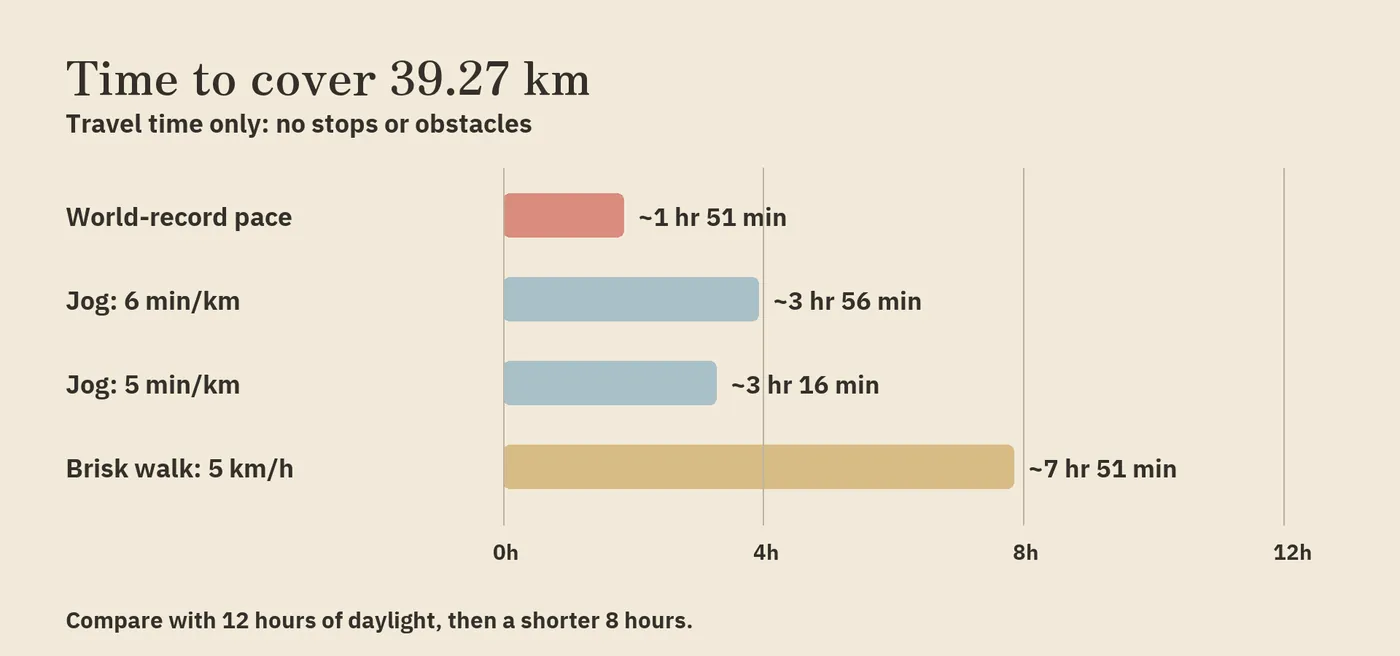
| Way of moving | Pace | Time for 24.4 miles (39.27 km) |
|---|---|---|
| Men's marathon world-record pace, London 2026 | About 4 min 33 sec per mile (2 min 50 sec/km) | About 1 hr 51 min |
| Jogging | About 9 min 39 sec per mile (6 min/km) | About 3 hr 56 min |
| Jogging | About 8 min 3 sec per mile (5 min/km) | About 3 hr 16 min |
| Brisk walking | About 3.1 mph (5 km/h) | About 7 hr 51 min |
On April 26, 2026, Sabastian Sawe ran the London Marathon in 1:59:30, the first sub-two-hour performance in an official race. That time covers the full marathon: 26 miles 385 yards (42.195 km). It is not the time for Melos’s shorter route. Sources: World Athletics’ race report and its marathon distance guide.
To compare the shorter distance at the same average pace, we calculate 7,170 seconds × 39.27 ÷ 42.195 = about 6,673 seconds: about 1 hour 51 minutes for 24.4 miles (39.27 km). The displayed pace is rounded; the calculation uses the unrounded value. This comparison uses the April 2026 performance as its benchmark. The figure shows the same calculation in kilometers. Unlike the marathon record itself, the shorter-route time is a calculation, not a recorded race result.
The story is set in early summer. For a conservative comparison, we assume twelve hours of daylight and then try a shorter eight-hour window. All the times in the table fit within eight hours, without stops or obstacles. The distance alone is manageable at these assumed speeds. What nearly defeats Melos is the flood, the bandits, his loss of urgency, and the temptation to quit.
The story contains three one-way journeys between village and city: 39.27 km × 3, about 73 miles (118 km), or 2.8 marathons. The first journey happens before the king grants the reprieve, so this total does not all fall within the three days he is given.
A key moment, in our own words
Near the end, with the city in sight, Philostratus urges Melos to stop because he believes it is too late. Melos's response reveals what keeps him going: success is no longer his only reason to run. A friend is trusting him, and he refuses to abandon that trust. Even when the outcome seems hopeless, the promise still matters.
Three questions to think about
- Why does the king change? Melos's timely arrival may not be the only reason. The king also sees two friends openly admit their moments of weakness.
- Is Melos a perfect hero? He takes his time on the road and almost gives up. How do those weaknesses change the meaning of his final effort?
- Do you know anyone you would run that far for? Is there someone who trusts you in that way? Think about what a promise means in your own life.
Reading trust through moments of weakness
These are possible readings of events in the Japanese text, rather than claims that Dazai intended a single correct lesson.
What the king expects, and what he sees
During the bargain, the king expects Melos to stay away. He plans to use the hostage’s death as evidence that people cannot be trusted. At the end, he sees more than a successful return: he also watches the friends admit their failings and embrace. Only then does he ask to join them.
That sequence invites a question. Is speed alone what changes the king’s mind, or does the friends’ willingness to acknowledge weakness matter too? The text gives us events to consider without requiring us to reduce them to one moral.
Why the spring matters
When Melos collapses, physical exhaustion and the temptation to abandon his promise arrive together. Drinking the spring water helps his body recover; hope and a renewed sense of obligation follow. The scene connects a change of mind with a bodily need. Read in that order, his recovery may feel closer to an ordinary human struggle than an effortless heroic triumph.
Frequently asked questions
Why does Melos return if he expects to die?
His return will save Selinuntius, who is being held in his place. Melos intends to take back his own position as the condemned man. The king even offers to pardon him if he arrives late, but accepting that escape would mean abandoning his friend.
Does Selinuntius trust Melos without a single doubt?
No. At the execution ground, he admits that he briefly doubted Melos once. Melos also acknowledges his own moment of weakness. Describing them as friends who never waver misses an essential part of their reunion.
Does the king send the bandits?
Melos asks the bandits whether the king ordered the ambush, but they do not answer. The narrator does not confirm his suspicion. It is useful to distinguish what a character believes from what the story establishes.
Is Melos running continuously throughout the story?
No. He sleeps, attends the wedding, strolls and sings after passing the next village, and later collapses. Following those changes of pace helps explain why the final journey becomes so urgent.
What should we make of the friends asking to be struck?
This is an event in the story: each man acknowledges a failing and asks the other to strike him before they embrace. One possible reading is that their honesty, as well as their endurance, matters to their friendship. It gives readers a way to ask how admitting weakness might relate to trust.
The factual answers above follow Dazai’s Japanese text on Aozora Bunko, particularly the bargain with the king, the encounter with the bandits, and the confessions at the execution ground. The original has no numbered chapters; the four acts in this guide are editorial divisions.
Read it yourself
Read the free Japanese original on Aozora Bunko
Aozora Bunko is a free Japanese digital library, comparable to Project Gutenberg. On the book page, choose the XHTML reading link. The text is in Japanese. Its roughly 9,800 characters take about 16–25 minutes at the assumed reading speed; your own pace will vary.
For English, check your library or bookstore for a published translation. Kodansha's publisher page gives one example. The final comic surprise is left out of this article.
Shorts
Sources
Where the facts and numbers in the video and on this page come from.
- Dazai's Japanese text, Aozora Bunko (characters, journey, and season)aozora.gr.jp/cards/000035/files/1567_14913.html
- Publication and school-textbook context, Japanese Wikipediaja.wikipedia.org/wiki/走れメロス
- The Japanese rija.wikipedia.org/wiki/里
- World Athletics: marathon distance (26 miles 385 yards (42.195 km))worldathletics.org/disciplines/relays/marathon
- World Athletics: London Marathon 2026worldathletics.org/competitions/world-athletics-label-road…
- World Athletics: all-time men's marathon listworldathletics.org/records/all-time-toplists/road-running/…
- Damon and Pythiasen.wikipedia.org/wiki/Damon_and_Pythias
- Run, Melos! — free original text, Aozora Bunkoaozora.gr.jp/cards/000035/card1567.html
- English translations of Run, Melos! in print and digital (publisher info)kodansha.co.jp/book/products/0000229037
- dictionary.com/browse/damon-and-pythias
Voice, music, art
- Music (OpenTracks): “茶屋にて” by MATSU / “縁側” by siroimu / “百花繚乱” / “藁の記憶”
- Original illustrations and diagrams: Tamelabo.